
Are Prefabricated Cabinets Lower Quality?
One of the questions homeowners often ask is whether prefabricated cabinets are simply a cheaper, lower-quality alternative to custom cabinetry.
The short answer is no—not automatically.
Prefabricated cabinetry can be well built, durable and suitable for long-term use when the materials, hardware, construction and installation are appropriate for the project.
The way cabinetry is manufactured affects sizing, selection and design flexibility, but it does not tell you everything about its quality. Two cabinets may have very different prices while using similar materials. At the same time, two cabinets in the same price range may be built very differently.
That is why it is important to look beyond the label.
What Does “Prefabricated” Actually Mean?
Prefabricated cabinetry is manufactured in established sizes, door styles and finishes. Instead of building every cabinet individually for one kitchen, the manufacturer produces a collection of components that can be arranged to suit different layouts.
Some cabinets arrive assembled. Others are supplied ready to assemble, commonly called RTA cabinetry. RTA describes how the cabinets are delivered and assembled; it does not, by itself, describe their material or quality.
Fully custom cabinetry is produced specifically for the project. Cabinet dimensions, finishes and special features can be developed around the room and the homeowner’s requirements.
If you are unsure how this differs from a custom-designed kitchen, we explain the distinction in What Does a Custom-Designed Kitchen Really Mean?
Both approaches can be used to create a thoughtfully designed kitchen.
Why Some Cabinetry Costs Less
Factory-produced cabinetry can often be offered at a lower price because the manufacturer repeatedly produces the same cabinet sizes, doors and finishes. This reduces the time required for individual fabrication.
That does not necessarily mean corners were cut. It may simply mean the production process is more efficient.
Fully custom cabinetry usually requires more individual planning, manufacturing and finishing. The additional cost makes sense when the project genuinely benefits from unusual dimensions, a specific finish or a feature that cannot be created using available components.
The important question is not simply which option costs more. It is what you are receiving for the price.
Compare the Actual Construction
When comparing cabinetry, ask what the cabinet boxes, doors, drawers and hardware are made from. Do not assume that a higher price automatically means better materials.
For example, an established cabinet collection may include plywood cabinet boxes, solid wood or MDF doors and soft-close hardware. A fully custom quotation may use different materials depending on the manufacturer, project requirements and budget.
Neither description is enough on its own. The specifications should be clearly explained so you understand what you are comparing.
You do not need to become a cabinet expert. A designer or supplier should be able to explain the main differences in plain language.

Installation Also Affects the Result
Cabinet quality is only part of the finished kitchen.
The layout, measurements and installation all affect how the cabinetry looks and functions. Fillers need to be considered so doors and drawers can open properly. Cabinets must be level and aligned, and finishing details should be planned before installation begins.
A well-made cabinet can still produce a disappointing result if the layout or installation is poorly handled. A more affordable cabinet can look excellent when it is properly planned and installed.
This is one reason it is helpful to evaluate the complete project rather than judging cabinetry from a sample door or price alone.
When Fully Custom Cabinetry Is Worth Considering
Fully custom cabinetry can be a good choice when the room has unusual dimensions or when the design depends on a particular feature that cannot be achieved with available cabinet sizes.
It may also make sense when you want a specific door style, colour, finish or interior arrangement.
The additional cost should provide a clear benefit. If standard components already suit the room and achieve the intended design, fully custom construction may not be necessary throughout the entire kitchen.
In some projects, the best approach is to use custom cabinetry only where it adds meaningful value.
When a Prefabricated or RTA Cabinet Collection Works Well
A prefabricated or RTA cabinet collection may be a practical choice when the available sizes work well with the room and the preferred door style and finish are already offered.
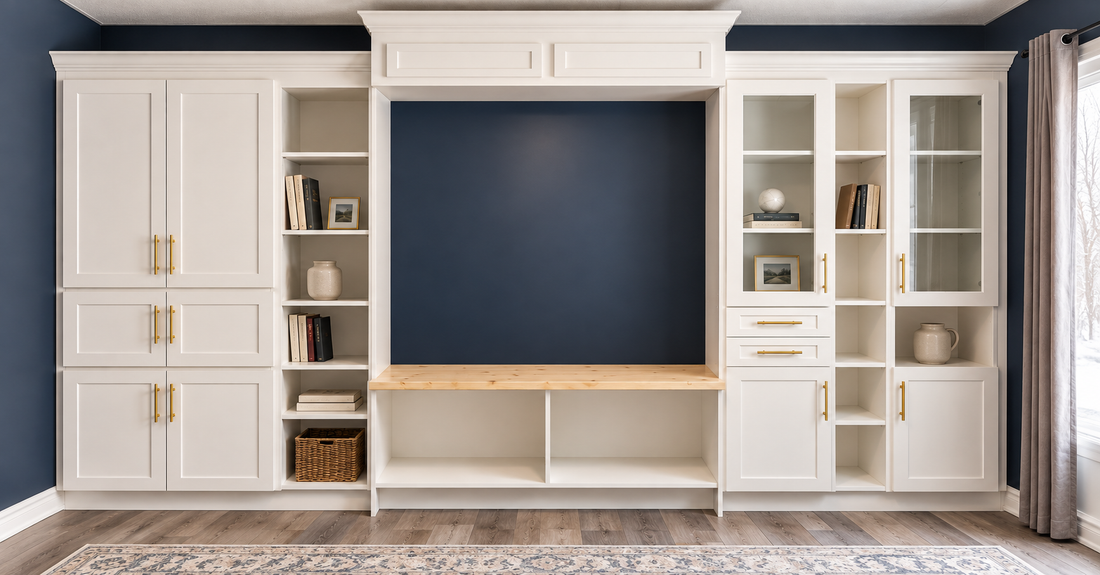
These collections can still be arranged as part of a custom-designed layout. Panels, trim, open shelving, glass-front cabinetry, wine storage and other design features can sometimes be used to create a more individual result.
The design still needs to respond to the room. The fact that the cabinets come from an established collection does not mean every kitchen using them should look the same.
Look at the Kitchen as a Whole
Cabinetry should not be evaluated separately from the rest of the kitchen.
The layout, storage, countertops, appliances, lighting and installation details all work together. Spending more on custom cabinet construction may not improve the project if it leaves too little room in the budget for other important parts of the kitchen.
On the other hand, choosing cabinets based only on the lowest price can create limitations that become costly later.
A good design process looks at where the budget will make the greatest difference. That decision will not be the same for every homeowner.
Questions to Ask Before Choosing
Before making a decision, ask:
- What are the cabinet boxes and doors made from?
- What type of drawer system and hinges are included?
- Which sizes, finishes and accessories are available?
- Does the proposed layout work properly in the room?
- Are delivery and installation included in the quotation?
- What parts of the design require custom work?
Clear answers are more useful than labels such as “prefabricated,” “semi-custom” or “fully custom.”
The Right Choice Depends on the Project
Prefabricated cabinetry is not automatically low quality, just as fully custom cabinetry is not automatically the best choice for every kitchen.
The right option depends on the room, the materials, the design requirements and how the kitchen needs to function. Sometimes that means using an established cabinet collection. Sometimes it means fully custom cabinetry. In other cases, a combination of both provides the most sensible result.
Before deciding, compare the actual specifications and ask why a particular approach is being recommended. A trustworthy professional should be able to explain the benefits, limitations and costs clearly—without relying on labels alone.
If you are planning a kitchen in Barrie or the surrounding area and would like help comparing your options, contact us to discuss your space.